


Buying Guides


When Queens of the Stone Age released Songs for the Deaf in 2002, they took the dusty, hypnotic riffs of Desert and Stoner Rock and turned them into something that began their ascent to stadiums across the globe.
Featuring Dave Grohl on drums alongside Josh Homme and bassist Nick Oliveri, the album produced some of QOTSA's biggest tracks, including "No One Knows", "Go with the Flow" and "First It Giveth".
At the centre of it all is Homme's unmistakable guitar sound. It is heavy without relying on masses of distortion, thick without becoming muddy, and packed with a nasal, almost cocked-wah mid-range that lets his riffs cut through the enormous drums and bass onslaught of Grohl and Oliveri.
Homme has also been famously secretive about how he creates his tones and the gear he chooses, which makes Songs for the Deaf a particularly interesting album from a gear perspective.
Fortunately, producer Eric Valentine has since revealed some of the recording techniques behind "No One Knows" in interviews, while Homme's guitars and touring equipment from the period give us a clearer picture of the tools behind one of the most distinctive guitar records of the early 2000s.

1984 Ovation Ultra GP. Credit: Cleveland Guitar/ Reverb
The Ovation Ultra GP is the guitar most closely associated with Homme's early sound. Ovation's short-lived attempt at a conventional solid-body electric, built in the mid-1980s, was not a commercial success. Production was limited, and the model has since become a rare find.
Rather than relying on the usual Les Paul and Stratocaster formula, Homme developed a taste for unusual instruments. He owned several Ultra GPs, using them through Kyuss and early Queens of the Stone Age, and continuing to play them during the Songs for the Deaf touring period.
With a mahogany-based build and twin humbuckers, the Ultra GP sits broadly in Gibson territory. Its factory-fitted DiMarzio Super 2 humbuckers, however, gave it a brighter, more aggressive edge. That extra top-end definition is especially useful in C Standard, where darker pickups can quickly turn a heavy riff into a muddy one.
Homme is also strongly associated with using the neck pickup for his core sound – an unconventional choice for heavy guitar, where players usually reach for the brighter, tighter bridge pickup. Combined with restrained gain and an assertive mid-range, it produces the thick but articulate character heard throughout early QOTSA.
The “No One Knows” video famously shows Homme playing a Maton Mastersound MS520, and Maton guitars became a more visible part of his live arsenal around the Songs for the Deaf era.
There is no definitive record of that guitar appearing on the album itself. However, Homme used it extensively onstage, so it is fair to view it as a key part of his working rig at the time rather than make a firm claim about the sessions.
His relationship with Maton later produced the semi-hollow BB1200 JH signature model. That belongs to a later stage of the Homme story, rather than the original Songs for the Deaf sessions.
Tuning is central to the QOTSA sound. Homme often wrote, recorded and performed in C Standard:
Low to high, this is: C F B♭ E♭ G C
That is two whole steps below standard tuning, so familiar scales and chord shapes still work while the guitar carries more weight. Pair it with clear, moderately powered humbuckers, controlled gain and plenty of mids, and you are most of the way towards the core Homme recipe.
Homme would pair this lower tuning with a medium gain level and a mid-heavy tone to get his signature sound.
Homme's sound was not built around a familiar Marshall or Fender formula. Instead, he used a mixture of valve, solid-state and hybrid amps, often choosing gear for its character rather than its price tag or pedigree.
The Ampeg VT-40 is probably one of the most important amplifiers in Josh Homme's 2002 guitar rig. Introduced in the early 1970s, the VT-40 is a crushingly loud 4x10 valve combo rated at around 60 watts.
Homme has owned a VT-40 since he was young, and its ability to push the mids gave QOTSA a different tonal space from the heavily scooped guitar sounds that dominated early-2000s Metal.
Photographs from the “No One Knows” sessions show the VT-40 alongside the other amps used to shape the record's guitar sounds.
During the sessions, Homme also made use of solid-state Peaveys from his collection. Eric Valentine has confirmed that a small Peavey Decade practice amp was used on “No One Knows” – but as a bass amp. In Valentine's words, it “ended up being the majority of the bass sound”.
The guitars followed a similarly unconventional route. Valentine has described blending one of Homme's transistor Peaveys with his valve amps to build the guitar sound, the Peavey contributing a harder, less conventional character that complements the warmer Ampeg. It's a useful reminder that the right amp is the one that provides the right texture, not necessarily the one with the most impressive logo.

Tube Works RT-2100. Credit: Metro Sound & Music/ Reverb
Josh Homme had been using Tube Works MosValve equipment since his Kyuss days, most notably the RT-2100 series.
These unusual amplifiers combine a valve-driven preamp section with a solid-state power section – another example of Homme avoiding the conventional all-valve rock-guitar recipe.
For “No One Knows”, Valentine blended the Tube Works amp with one of Homme's solid-state Peaveys to create the core rhythm sound.
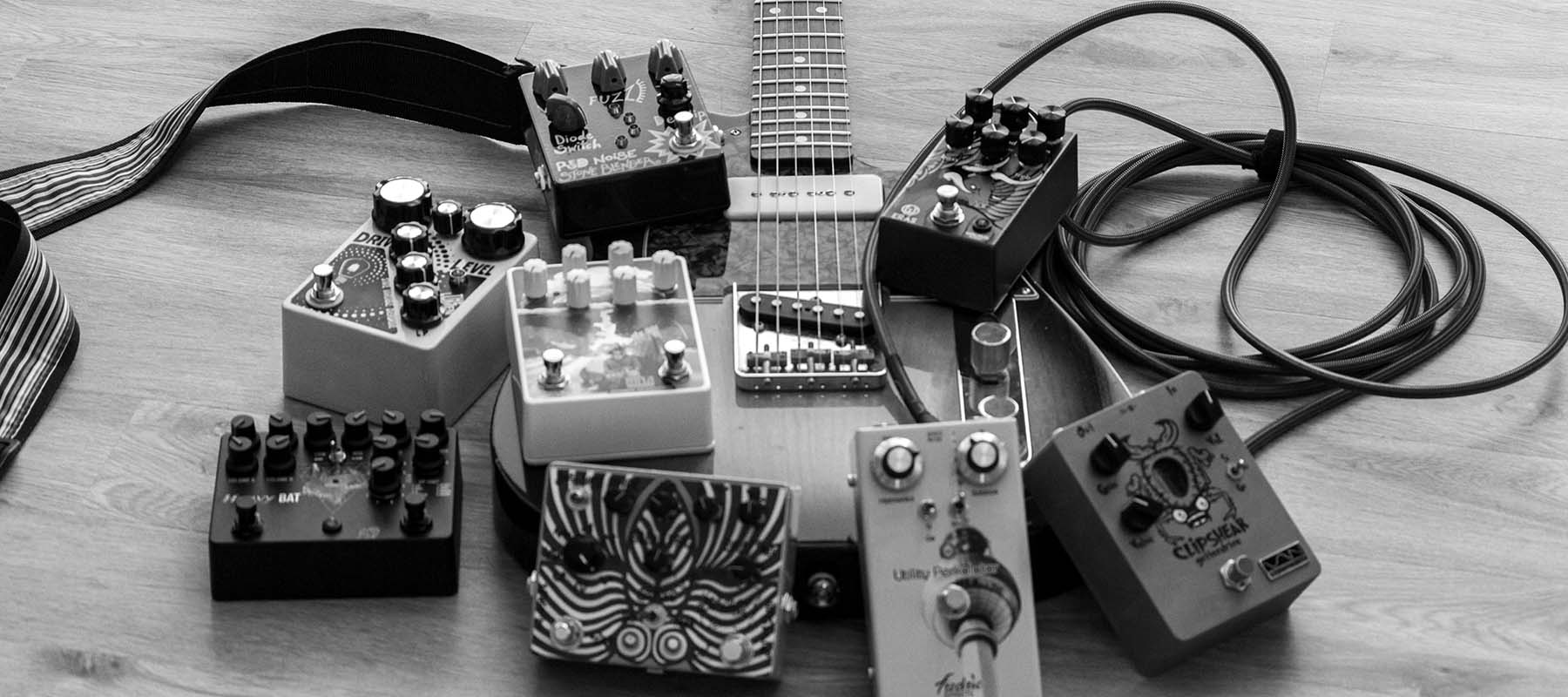
Given the dense nature of the QOTSA sound, it is easy to think a plethora of Fuzz and Drive pedals are also part of the equation here, but Josh Homme actually used pedals very sparingly during this era. The majority of the tone came from blending amps, but there were a few pedal choices to help push things along.

2001 ZVEX Super Hard On. Credit: Murph's Magic Tones/ Reverb
Josh Homme's guitar tech Dan Druff has previously disclosed that the Super Hard On was one of the important pedals used around the Songs for the Deaf period.
Despite the provocative name, the SHO is essentially a very simple clean boost with a single knob to control the boost level.
Rather than adding gain of its own, the SHO can push the signal hitting an amplifier much harder, forcing the amp itself to break up and go further into rich, harmonic overdrive.
This push into the amps is part of the Josh Homme guitar tone. The SHO is not adding colour; it is just pushing the amps that little bit further.
The humble Boss SD-1 also appeared in Homme's early Queens of the Stone Age rig and was documented in his live setup during the Songs for the Deaf era.
Rather than using it as a conventional Overdrive, Homme kept the drive low and used the pedal's level and tone to push and shape the amplifier – much as many Metal players used a Tube Screamer into a 5150 for a similar purpose.

Maestro Parametric Filter. Credit: Godlyke Distributing
One pedal that really helped define the QOTSA sound was the vintage 1970s Maestro Parametric Filter. It can boost or cut a chosen frequency, allowing the guitar to be pushed into a narrow, vocal-sounding mid-range.
Homme first used one during the Rated R sessions that preceded Songs for the Deaf. That cocked-wah-style mid focus became a signature part of the band's guitar tone and remains a useful reference point when chasing their sound.
Homme's own rig relied on rare guitars and oddball amps, but the underlying approach is accessible and affordable: a humbucker-loaded guitar tuned to C Standard, a mid-forward amp sound, a clean Boost or SD-1-style Overdrive with the drive set low, and an EQ that lets you control the mids.
Any dual-humbucker guitar will be a good starting point here, but for the most authentic vibe you should aim for something with a similar mahogany construction to Josh's preferred Ovations. A great, budget-friendly option could be an Epiphone Les Paul.
The important point is clarity. Choose vintage-voiced pickups that remain defined in C Standard; overly hot or dark pickups can turn low riffs into mush very quickly. Drop the tuning to C Standard, use the neck pickup more than you normally would, and let rip with those riffs!
You do not need to hunt down a VT-40. Look for a responsive mid-gain amp with useful EQ controls, then experiment with inexpensive or unfashionable solid-state options on the second-hand market. You may even find some old Ampeg or Peavey amps out there in the wild for cheap. Go hunting and find something cool!
Whatever you acquire, keep the low end under control and push the mids harder than you might normally. An amp with a switchable mid-frequency control is particularly useful, but it is not essential. The aim is a focused, dry, mid-forward sound, not a huge blanket of gain.
You can easily recreate some of Homme's pedal lineup on a budget because all you need are three main components: a clean Boost, a mid-focused Overdrive and a parametric EQ.
For the Boost, check out something affordable and reliable like the TC Electronic Spark Mini, or if you want to support a great smaller builder, the Kink Guitar Pedals PC Boost is a fun, boutique way to get those amps cooking a little harder.
[product=kink-guitar-pedals-pc-boost]
A boutique boost within your budget! Get your valves cooking with this miniscule but incredibly effective pedal.
[/product]
One of Josh Homme's Overdrive pedals of choice was the Boss SD-1, which remains hard to beat for the money. Use it as a boost and EQ shaper rather than as your main source of gain. Any similar SD-1 or Tube Screamer-style drive will get you into the same territory.
[product=nobels-odr-1x]
The ODR-1X retains the core character of the original ODR-1 - known for its open, natural sound with low-end presence - while expanding its potential with several quality-of-life changes. As a versatile drive for your QOTSA rig, it's exactly what you need!
[/product]
Next we come to the EQ. You could technically settle here for something like a Boss GE-7 EQ pedal, which will get you in the ballpark, but for more precise mid-range control look for a parametric or semi-parametric EQ.
[product=lichtlaerm-audio-amber-spyglass-studio-grade-hybrid-eq]
The Amber Spyglass is a studio-grade four-band EQ with a semi-parametric mid control and footswitchable mid boost – ideal for adding that extra kick to focused riffs or leads.
[/product]
There's also the Skeleton Key, from Funny Little Boxes, which is designed to capture not just one piece of the puzzle, but the overall sound and vibe of Homme's setup. Worth looking into if you can't stretch to several separate pedals but want to nail his tone.

Sleep Token IV's full guitar rig breakdown, including the tuning he'd prefer to keep under wraps...

At the centre of the Rage Against the Machine sound was guitarist Tom Morello – a player who showed you didn’t need a wall of effects to push boundaries. Instead, he built a simple rig and utilised unconventional techniques for out-of-this-world sounds.

Through the recording of Nevermind, Kurt Cobain used some basic gear that is now synonymous with the sound of the era. Let's dig into this and find out more about what Cobain used to create this decade-defining album...


