


Einkaufsführer


Whether you're chasing the crushing riffs of Killswitch Engage, the razor-sharp clarity of Bullet for My Valentine, or the ambience-soaked epics of Architects, the classic Metalcore guitar sound is instantly recognisable.
Over the last 20 years, Metalcore has evolved as many of the OG bands of the genre are now filling arenas around the world, but its raw, pummelling aggression still lies at the heart of its sound.
In this article, we're going to dig into the key things you need to know in order to dial in the perfect Metalcore guitar tone, looking at everything from key gear choices to recording and playing techniques!
Guitar choice plays a big part in nailing a killer Metalcore sound. Due to the typical use of high levels of gain and down-tuning, you'll want to find a guitar that's fast in its response, with a tight sound so the low end doesn't get too spongy.
There are no set rules about active vs. passive pickups when it comes to Metalcore, however many Metalcore players do tend to prefer an active pickup for the additional tightness it can give in the low end, and it's not uncommon to see your favourite players using a set of EMG 81/85 or Fishman Fluence pickups.

Many of the classic Metalcore bands recorded their seminal albums on pretty traditional guitars, and it wasn't uncommon for a Gibson Les Paul to be present somewhere along the way. Mahogany and basswood bodies with maple caps are pretty standard fare for this playing style, as they can handle the lows but still give plenty of punch and attack in the highs.
When it comes to the guitar neck, anything goes, however as with all genres, having a thru-neck or set neck guitar will aid the sustain and clarity of the guitar.
Due to the heavy, aggressive nature of the music, it's not uncommon to find that your favourite Metalcore bands might just be down tuning their guitars. Many older Metalcore bands prefer the downtuned 6 string approach over the extended range approach of a 7 or an 8 string which is more common in newer, more progressive Metal bands.
Metalcore, like all genres can easily be played in standard tuning, but downtuning and drop tuning is more common. Here are some of the more common Metalcore tunings and some bands that use them:
For a crushing Metalcore tone, it's very easy to think you need to go straight for the highest gain amp on the market, but this is not always true. Some of your favourite Metalcore albums probably use less gain than you imagine.
That's not to say that many of the go-to amplifiers used by the big hitters aren't absolute gain monsters. The most commonly used Metalcore amps can crank the gain to 11, but seldom do.

Mesa Boogie Dual Rectifier. Credit: PoppyPix - stock.adobe.com
If you're looking for the old-school, real amp approach here are a few that crop up many times on big Metalcore albums:
If you want an amp that can deliver the goods but you want to lean more into the classic realm of tone, you could consider checking out something like:
A huge component in an articulate and heavy Metal tone is the speaker choice. While most speakers will work and get the job done, one of the most commonly recorded Metalcore speakers is the Celestion Vintage 30. This speaker gives a tight, focused sound that you've heard on countless Metalcore albums.
The Vintage 30 was designed for gain. It's got warmth in the lows, punch in the mids and detail in the top end. Paired with an SM57 microphone, you're onto a winning Metal combination.
If you want a slightly looser, more classic tone you could also check out something like a Celestion Greenback (G12M) or Whiteback (G12T-75). These are slightly looser feeling than a Vintage 30 and can give you a good combination somewhere between old-school and modern tones.
It's also hard to ignore the biggest change in modern Metal guitar tones: digital amps. Many players are opting for the digital realm for their high gain tones these days due to a variety of reasons.
The first being ease of transportation. Touring costs money, and shipping gear is expensive. If you can go digital, you're cutting down spending on freight and saving your spine in the process.

Kemper Profiler Player multi-effects pedal and a connected expression pedal.
The second is consistency. Metal is all about tightness and attack. Real amps and microphones can sound different in different rooms. Digital will give you a more consistent sound night after night, regardless of the environment.
The third is flexibility. Having something like a Quad Cortex or a Helix allows you to mix and match different signal chains in ways that would be impossible unless you could bring 5 different amps to the show. Digital allows you to run wild with your imagination and create complex tones with ease.
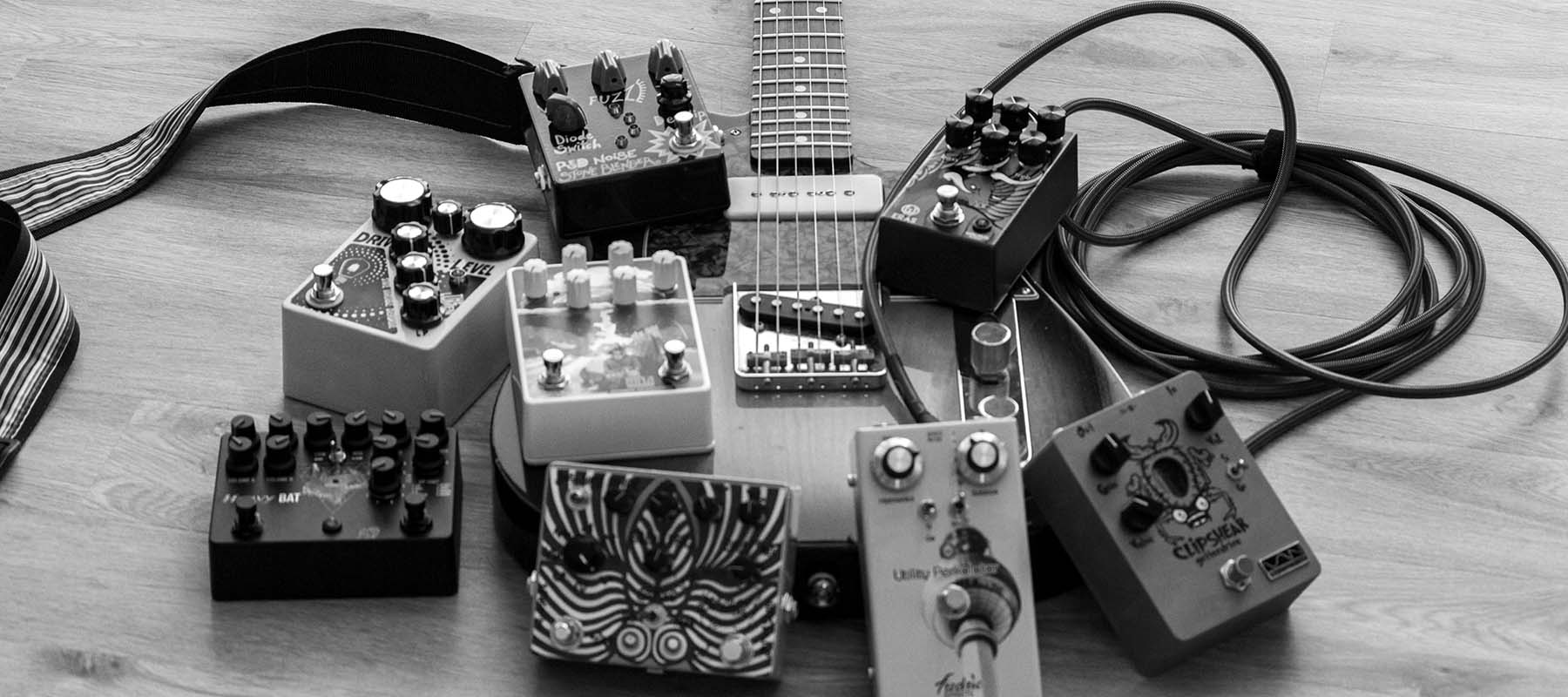
For the most part, the Metalcore guitar tone is a combination of a good amp with a good guitar, with very little need for anything else. However, there are various pedals you can add to the mix to enhance certain aspects of your tone.

One classic recording technique used in the genre would be to pair a high gain amp like a 5150 or a Dual Rectifier with an overdrive pedal with a slight low end roll off, such as an Ibanez Tubescreamer.
The pedal should be set with the gain on 0, the volume on 10 and the tone to taste. This boosts the front-end of the amp, giving you some additional gain but also tightening and focusing the low end.
[product=lichtlaerm-audio-aquaria]
Klon-style overdrive with active 4-band EQ. If you’ve ever wished for the tone of that rare classic overdrive but felt limited by its simplicity (and price...), the Aquaria is your answer. It offers the familiar harmonic bloom and dynamic response of the original but gives you surgical control to sculpt, blend and expand.
[/product]
If you want to keep things tight and quiet, a good noise gate with a fast attack to clamp down on any unwanted noise will work wonders in your chain – particularly when you're workging with high gain sounds.
The idea of the noise gate is to minimise any unwanted hiss from the amp and also to keep your guitar silent when you're not playing, especially if you play riffs with a lot of staccato feel.
[product=lichtlaerm-audio-the-key-and-the-gate]
Noise gate with sidechain ability. Ideally suited to heavier genres of music thanks to its 3-way Response toggle, allowing you to fine-tune the attack and delay characterstics of the noise gate to suit heavy chugging, or to let those searing solos sing.
[/product]
Much like the Overdrive, an EQ pedal can go a long way with tone shaping. It can help sculpt specific parts of your sound to help you cut through the mix and remove any unwanted muddy frequencies. This is useful when playing in lower tunings to keep the guitar sounding focused.
[product=lichtlaerm-audio-amber-spyglass-studio-grade-hybrid-eq]
Super-versatile EQ & mid-boost with massive headroom. The Lichtlaerm Audio Amber Spyglass is a studio-grade EQ pedal with footswitchable Mids control. With 4 perfectly selected active frequency bands, it allows you to tailor your sound pre- or post-gain with drastically different results.
[/product]
For riffs, you will probably be leaning more towards a dry tone with very little in the way of ambience added but for lead guitar tones and clean segments, adding a layer of Delay or Reverb can lift your playing out of the mix and create some really interesting clean sounds.
[product=lichtlaerm-audio-untiefe-multi-modulation-reverb]
Modulated reverb with effects loop. If you're after more than your basic reverb sounds, the Lichtlaerm Audio Untiefe has you covered. Its lush, modulated overtones can be used to go from subtle room reverb to washy shoegaze tones, huge synth-like pads and more.
[/product]
If you're getting into recording at home and you want to get the most out of your songs there are a few techniques you can implement to ensure your guitar always sounds huge.
One of the most common ways to thicken out a guitar tone is double or quad tracking. This means re-recording the same part multiple times and layering them in the mix stage.
The most common way to do this is to record the same part twice and pan it hard left and right. The slight variance in each performance will add a thick sound with a hint of natural chorusing.
If you want to take this further you can quad track, and have 2 takes panned each way. This will give you a much fatter sound but is harder to mix.
When double tracking, you want to be as precise as possible so the tracks are as tight as they can be.
Real amps are always a great asset to any studio session, but with the digital world catching up in so many ways, it makes sense to adopt a hybrid approach these days.
Alongside the classic tones you can get from a 5150 or a JCM900, you can also take plugins or tools like the Quad Cortex to create new sounds to blend in. You can also experiment with taking a feed from the amp's line out and run this via a number of other IRs to experiment with different speaker and mic combinations.
When recording high-gain, down-tuned guitars, you will want to do some careful EQ sculpting to stay out of the way of other instruments. Always try to low and high pass your guitars from 80Hz to 10kHz to remove any mud or harsh upper frequencies.
A top tip is to find the resonant peak around about the 4kHz mark and cut it with a narrow Q by between -7 and -10dB. This will cut out any harsh fizz and smooth out your guitar tone without affecting its ability to cut through.
Along with the tone tips, there are a few playing techniques that you absolutely need in your trick bag to become a great Metalcore guitar player.
Palm muting isn't a technique limited to the Metal world, but it's an essential thing to know for this style. You want those chugs to sound tight and machine-like.
Learn to control your mutes by experimenting with different palm pressures on the bridge. Press harder to get them tight, and loosen your palm to let the notes drag and ring slightly. This can add different levels of weight to your chugs.
Both picking directions are valid, but they both have different use cases: alternate picking will help you with your fast articulate guitar passages, while downpicking will give you that aggression and attack for your heavy riffs.
You can also experiment with different pick thicknesses. Many Metal players lean towards thicker picks for their improved attack.
Everyone loves a guitar squeal! Add fast pinches to your riffs or throw some slow, wide vibrato on a sustained pinch in a breakdown to really make the note jump out.
Now that you know how to dial in your tone, the gear to use, and the techniques to get the best out of your playing, it's time to go and write your own Metalcore masterpiece!
[product=metalcore-mayhem-jam-pack-volume-1]
Unleash your heaviest riffs with Metalcore Mayhem: Jam Pack Volume 1 - a high-impact collection of professionally recorded backing tracks crafted for guitarists who live for breakdowns, chugs, and soaring, melodic leads - think Killswitch Engage, Architects, Parkway Drive, Polaris, and While She Sleeps.
[/product]
There is over 20 years' worth of amazing downtuned Metalcore out there to inspire you, so discover some new bands as well as listening to the OGs; learn their riffs, build on their ideas and start creating something that matches your voice with the tools laid in front of you.
Our Metalcore Jam Pack is primarily designed for practice or writing sessions. This downloadable digital pack of five Metalcore backing tracks is your ultimate creative springboard, saving you the hassle of programming drums and giving you time back to come up with that killer riff!

At the centre of the Rage Against the Machine sound was guitarist Tom Morello – a player who showed you didn’t need a wall of effects to push boundaries. Instead, he built a simple rig and utilised unconventional techniques for out-of-this-world sounds.

During May, we start preparing ourselves for the biggest shift in the live music calendar... festival season!
Here's a round up of some interesting events to seek out this month.

When it comes to modern clean guitar tones, few players have carved out a niche for themselves as recognisable as Cory Wong.


