


Einkaufsführer
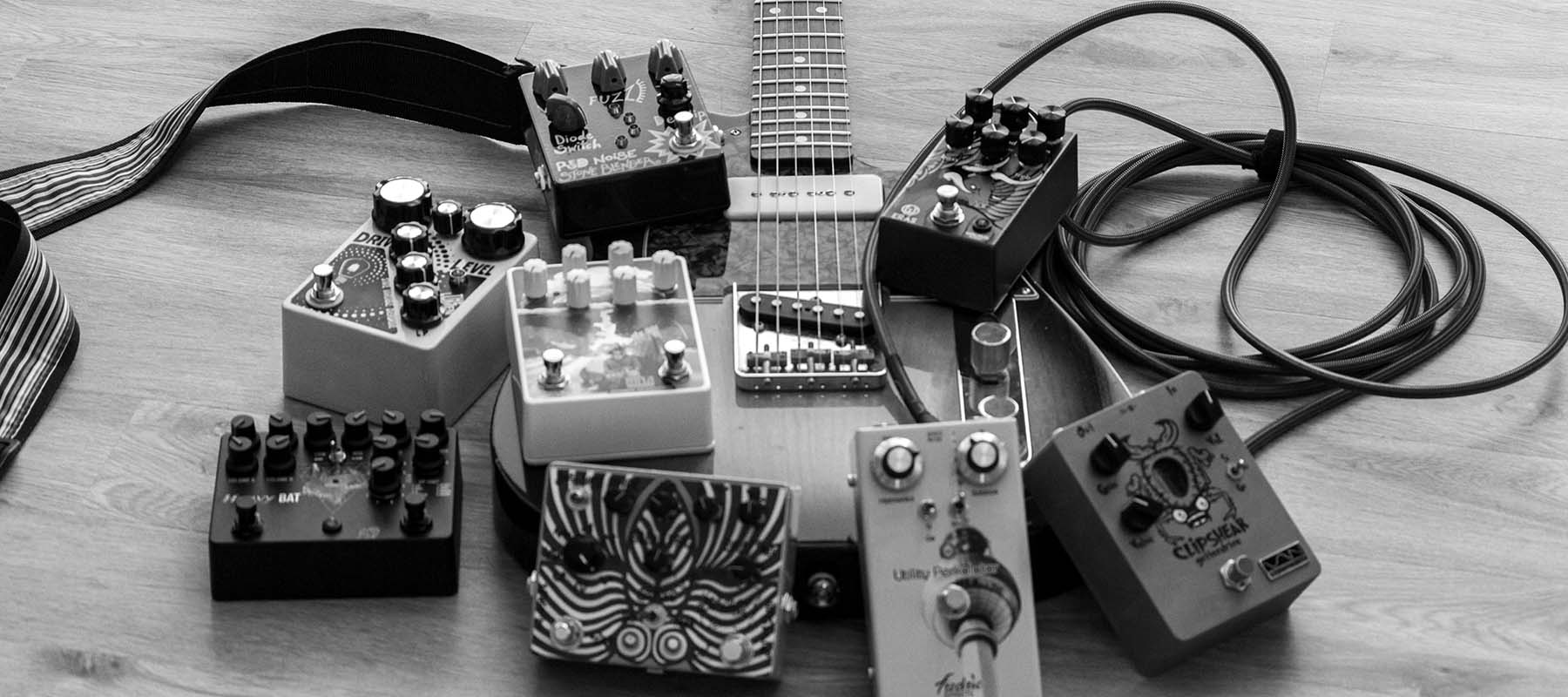


When it comes to guitar pedals, we guitar players are always searching for the next perfect pedal that is going to be a game changer in our tone chasing quest.
Whether you're chasing the ultimate amp-live overdrive, perfectly swirling modulation, or velvety delay trails, the components inside your stompbox all contribute to your final sound. One often-overlooked component with a surprisingly big impact is the Capacitors.
Capacitors are everywhere in analogue pedal circuits, shaping frequencies, controlling dynamics, and even impacting how a pedal feels under your fingers. But not all capacitors are created equal, and different types can add subtle (or not-so-subtle) colorations to your tone.
Let’s break down the types of capacitors commonly used in guitar pedals and how they can affect your sound.

Capacitors come in a range of shapes and sizes, and the role of the capacitor in a pedal circuit is quite a wide ranging one. The capacitors can handle some pretty important roles in your tone including:
Tone Filtering – Capacitors determine which frequencies get passed through and which get rolled off, making them critical to EQ circuits and tone stacks.
Coupling & Decoupling – They block DC voltage while allowing your guitar’s AC signal to pass between stages.
Timing Circuits – In delay, tremolo, and chorus pedals, capacitors help determine timing and modulation speed.
Power Filtering – Capacitors smooth out power supply voltage to reduce noise and hum.
Depending on their role, the type of capacitor used can make a real difference in tone, clarity, and dynamics.

Different capacitor materials and constructions have different electrical behaviours. If you're new to the world of capacitors, it might feel overwhelming, but if you break them down into a few smaller categories it will help you understand their role better based on their type.
Here's a breakdown of the most common types used in guitar pedals.
Ceramic capacitors are common due to their low cost and easy availability. However, they tend to have poor tolerance (less accurate capacitance values) and can introduce microphonic noise especially under high gain.
Tonal Traits: Can sound brittle or grainy. Higher frequencies may come across as harsh or “spiky.”
Best Use: Non-critical areas like power filtering or very basic circuits.
Where You’ll Find Them: Cheap pedals, mass-produced circuits, or budget kits.
Film capacitors are widely considered the best choice for tone-critical applications. They have tight tolerances, low distortion, and excellent stability. Types include polyester (Mylar) and polypropylene, each with subtle tonal differences.
Tonal Traits: Smooth, musical, transparent, and detailed. Great for preserving dynamics and warmth.
Best Use: Audio signal path, tone stacks, coupling stages.
Where You’ll Find Them: Boutique pedals, overdrive/distortion circuits, modulation effects.
Electrolytic capacitors are polarized capacitors, meaning they must be oriented correctly in the circuit. They offer high capacitance in a compact package but tend to wear out over time. Poor-quality electrolytic capacitors can cause muddiness or reduced headroom.
Replacing old electrolytic caps in vintage pedals can restore lost punch and responsiveness.
Tonal Traits: Not typically chosen for their “sound,” but can affect dynamics and headroom.
Best Use: Power filtering, low-frequency coupling, and bypass.
Where You’ll Find Them: Everywhere, but especially in power supply and output sections
Tantalum caps are smaller and more stable than electrolytic capacitors, but they’re also more fragile. They tend to be more expensive and can fail abruptly if stressed. Some pedal builders like them for their vintage character, but they’re not universally loved.
If you're chasing a specific vintage tone, tantalum might be worth trying, but don’t expect night-and-day tonal shifts
Tonal Traits: Some describe them as warmer or darker than electrolytics; others find them lifeless.
Best Use: Compact vintage-style builds.
Where You’ll Find Them: Some vintage fuzz and analogue delay circuits.
Silver mica caps are extremely stable and accurate, with low distortion and noise. They shine in applications where high-frequency precision matters. Think of them as the opposite of grainy ceramics.
If you want your highs to shimmer without becoming shrill, silver mica caps are a the perfect option.
Tonal Traits: Clear, high fidelity, excellent for highs without harshness.
Best Use: Treble boost circuits, high-frequency filters.
Where You’ll Find Them: Boutique treble boosts, EQ circuits, and high-end mods.

Once you understand the different types of capacitors that you can choose from, you then need to decide the other major factor, the value. The type of capacitor matters in your tone shaping journey but so does its value (measured in pF, nF, or µF).
Different values will all interact in different ways with your guitar signal:
Low values (10pF – 1nF): High-pass filtering—great for treble bleed or cutting lows.
Mid-range values (10nF – 100nF): Affect mids and highs—common in tone stacks and coupling stages.
High values (1µF and up): Pass more low-end—used for power filtering and bass coupling.
Even small changes can shift the character of your tone. For example, if you want more bass in your overdrive, try a higher-value coupling cap. If you want tighter response, go lower.

Swapping out caps for different types or values is a popular modding technique, also known as capacitor rolling. The great thing with this mod is that it's a fairly easy and affordable mod to do to any pedal you own. You only need some basic soldering iron and electrical skills to perform capacitor mods at home.
Here are a few examples of when capacitor modding would be a useful thing to try out:
TS-style Overdrive: Swapping coupling caps or tone stack caps for film types can improve clarity and reduce muddiness.
Fuzz Pedals: Vintage fuzz circuits often sound warmer and more organic with old-school film or tantalum caps instead of ceramics.
EQ/Tone Controls: Changing the value of tone caps can shift the frequency emphasis to suit your rig or playing style.
Remember always take note of voltage ratings and polarity before swapping caps, especially when dealing with electrolytic or tantalum capacitors.
Capacitors may seem like just a small part of your pedal's circuit, but they’re often the unsung heroes behind the tone. Now that you have an understanding of what they are, what they do and what different types can offer you, you can now go and let your ears decide what you like best.
If you have access to a variety of pedals, test them out and listen with a critical ear to how each different type behaves and responds to your playing.
If you want to get into modding capacitors but you don't want to tear down your favourite overdrive or fuzz pedal, try starting with a cheap clone of that same pedal. Use the cheaper version as a platform to try different mods, hear how they react and build your modding skills before you rip apart your 1982 Ibanez Tubescreamer to switch caps!
When you're making pedal buying decisions, remember all the things you've learnt in this article and how that can change your tone for better or worse. Next time you stomp on your favourite pedal, remember: the tone magic might just be coming from a tiny capacitor hidden inside.

Summer is officially done for another year, but just because we're putting away the summer wardrobe, it doesn't mean we have to stop having fun, right?


July is peak festival season. Perhaps you've already braved the British heatwave to attend a festival this year, but now is the time to start bulk-buying suncream in preparation for the cool upcoming events happening this month!


